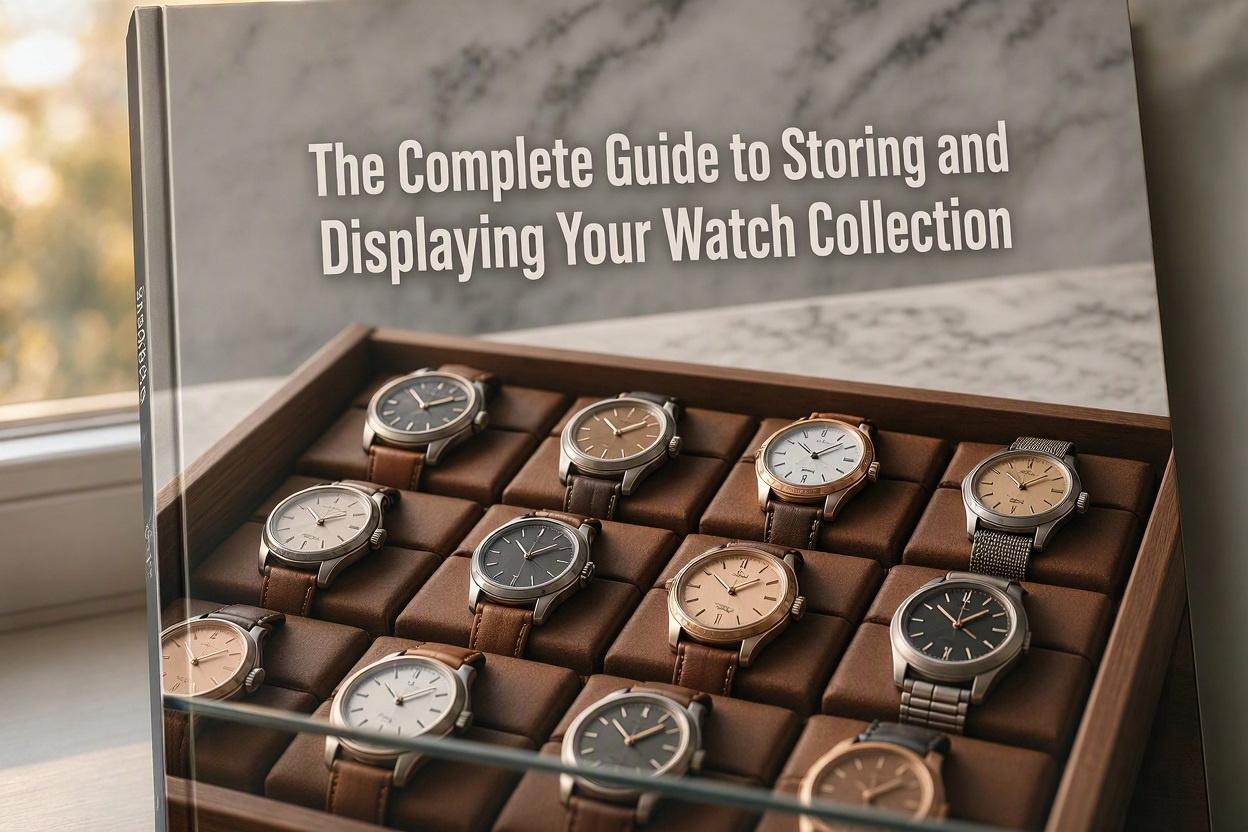
The Complete Guide to Storing and Displaying Your Watch Collection
A watch collection is worth protecting the moment it grows past a single timepiece. Once you own two, three, or a dozen watches, the question shifts from “which watch should I wear today” to “how do I keep every piece safe, organized, and ready to wear.” That question has more nuance than most people expect. Humidity, dust, magnetism, sunlight, and simple bad luck all take a toll on watches that sit unprotected in a drawer.
This guide walks through the practical side of watch storage and display, covering the materials that matter, the mistakes that shorten a watch’s life, and the setups that actually work for collectors at every level.
1. Why Proper Storage Matters More Than Most Collectors Realize
A watch is a small mechanical or electronic instrument, and instruments are sensitive to their environment. Leaving a watch loose in a drawer exposes it to scratches from keys, coins, or other watches. Direct sunlight fades dials and can degrade luminous material. Fluctuating humidity accelerates corrosion inside case backs and can fog crystals. None of this happens overnight, but it compounds over years.
Collectors who store their watches properly tend to notice fewer service issues, less cosmetic wear, and a longer working life for both quartz and automatic movements. The upfront cost of good storage is almost always smaller than the cost of a repair caused by neglect.
2. The Core Storage Options, Ranked by Use Case
Most collectors end up using a mix of the following, rather than relying on just one.
- Individual watch pouches – Best for travel. Microfiber pouches protect against scratches but offer no protection from impact or humidity.
- Watch rolls – A step up from pouches, useful for carrying two to four watches securely without a rigid case.
- Watch boxes – The standard for at-home storage. A well-built box separates each watch into its own padded slot, preventing case-to-case contact and keeping straps from tangling.
- Watch winders – Necessary only for automatic watches you don’t wear daily but want to keep running and accurately set.
- Display cases – Designed for watches you want to see as well as protect, usually with a glass front and interior lighting.
If you’re building a collection from scratch, a dedicated watch box is usually the first serious upgrade from a drawer, and it’s worth browsing this guide rather than picking a generic option, since slot size, cushion material, and lid construction vary enormously between brands.
3. What Makes a Good Watch Box
Not all watch boxes are built equally, and the differences matter more than they appear on a product photo.
- Slot size and cushion firmness – Slots that are too tight stretch straps over time; cushions that are too soft let watches shift and rub against the box’s interior.
- Lid seal – A snug-fitting lid keeps dust out. Loose lids are a common complaint with budget boxes.
- Interior lining – Velvet or suede linings are gentler on cases and straps than synthetic fabrics, which can trap moisture.
- Locking mechanism – Worth considering if the box will sit somewhere accessible to guests or household staff.
A box with real slot padding and a tight seal does more to protect a watch day-to-day than almost anything else on this list, which is why serious collectors treat it as a foundational purchase rather than an afterthought.
4. Display Cases: When Showing Off Makes Sense
A display case serves a different purpose than a storage box. It’s built for watches you want visible, whether that’s a rotating collection on a desk or a dedicated wall unit in a home office.
Good display cases share a few features:
- UV-filtered glass to reduce fade from ambient light
- Interior lighting that doesn’t generate excess heat
- Adjustable humidity control in higher-end models, which matters if the room isn’t climate-controlled
Display cases work well for collectors who rotate watches often and want quick visual access, rather than digging through a box. If you’re deciding between a simple box and a display case, it helps to explore top luxury watch display options before committing, since the price range and feature set vary widely depending on how many watches you need to show at once and whether humidity control matters in your climate.
5. Watch Winders: Do You Actually Need One?
Winders are one of the most debated purchases in the hobby. Here’s the short version:
- You need one if you own automatic watches with complications (perpetual calendars, moon phases) that are tedious to reset after the watch stops.
- You probably don’t need one if you wear your automatics regularly or don’t mind manually setting the time and date.
- Buy quality if you buy at all. A cheap winder with an inconsistent motor can actually cause more wear on a movement than letting it sit still.
Winders are a convenience tool, not a protection tool. They don’t shield a watch from dust, humidity, or impact, so they work best alongside a box or case, not instead of one.
6. Managing Humidity — and Magnetism
Watches, especially vintage pieces, are sensitive to moisture. A few practical habits go a long way:
- Keep storage away from bathrooms, kitchens, and exterior walls prone to condensation.
- Use silica gel packets inside boxes in humid climates, replacing them every few months.
- Avoid storing watches near direct heat sources like radiators or sunny windowsills.
- If you live somewhere with big seasonal humidity swings, a display case with built-in humidity control is worth the extra cost.
Magnetism is the less obvious threat. Everyday items like phone chargers, laptop speakers, and magnetic bag clasps can throw off a watch’s timekeeping, and movements can be affected by magnetism from everyday electronics even when they’re stored properly in every other respect. Keeping a storage box away from speakers or wireless chargers is a small habit that prevents an annoying, avoidable repair.
7. Common Mistakes Collectors Make
- Storing watches in bathroom cabinets because it’s convenient — the steam from showers is genuinely damaging over time.
- Overpacking a watch box with pieces that don’t fit the slots properly, which stresses straps and bracelets.
- Ignoring magnetism by storing watches near speakers, phone chargers, or laptop lids, which can affect movement accuracy.
- Skipping servicing because the watch “looks fine” — storage protects the exterior, but movements still need periodic maintenance regardless of how well a watch is stored.
8. Building a Setup That Scales With Your Collection
Most collectors go through a predictable progression: a single pouch, then a small box, then eventually a mix of boxes for daily wearers and a display case for pieces they want to see. There’s no need to buy the “final” setup on day one. Start with a box sized slightly larger than your current collection, since most people underestimate how quickly a hobby like this grows.
For those building a full home setup — box, winder, and display case together — it’s worth browsing the full range on the Aevitas online store, since buying pieces that share a design language (matching wood tones, consistent hardware finishes) makes the final result look intentional rather than assembled piecemeal.
Final Thoughts
Good watch storage isn’t about spending the most money — it’s about matching the setup to how you actually use your collection. A rotation of daily wearers benefits from a solid box with well-fitted slots. Rarely-worn automatics with complications benefit from a winder. Pieces you want to enjoy visually deserve a proper display case with UV protection. Most collectors end up needing a combination of all three, built up gradually rather than all at once.
FAQs
1. How many watches should a beginner’s watch box hold?
A 6 to 10-slot box is a practical starting point. It accommodates a small growing collection without being oversized for someone who owns two or three watches today.
2. Do quartz watches need the same storage care as automatics?
Quartz watches don’t need winders, but they still benefit from boxes or cases that protect against dust, scratches, and humidity, since the case and crystal are just as vulnerable as on any automatic.
3. Can a watch winder damage a watch?
A low-quality winder with an erratic or overly fast rotation can add unnecessary wear to the movement. A well-made winder set to the correct rotations per day for the specific watch is safe for long-term use.
4. Is a display case safe for vintage watches?
Yes, provided it has UV-filtered glass and isn’t placed in direct sunlight or a room with major temperature swings. Vintage dials and lume are more sensitive to light exposure than modern ones.
5. How often should silica gel packets in a watch box be replaced?
Every three to six months in most climates, more frequently in humid regions. Packets lose their moisture-absorbing capacity over time and stop being effective once saturated.