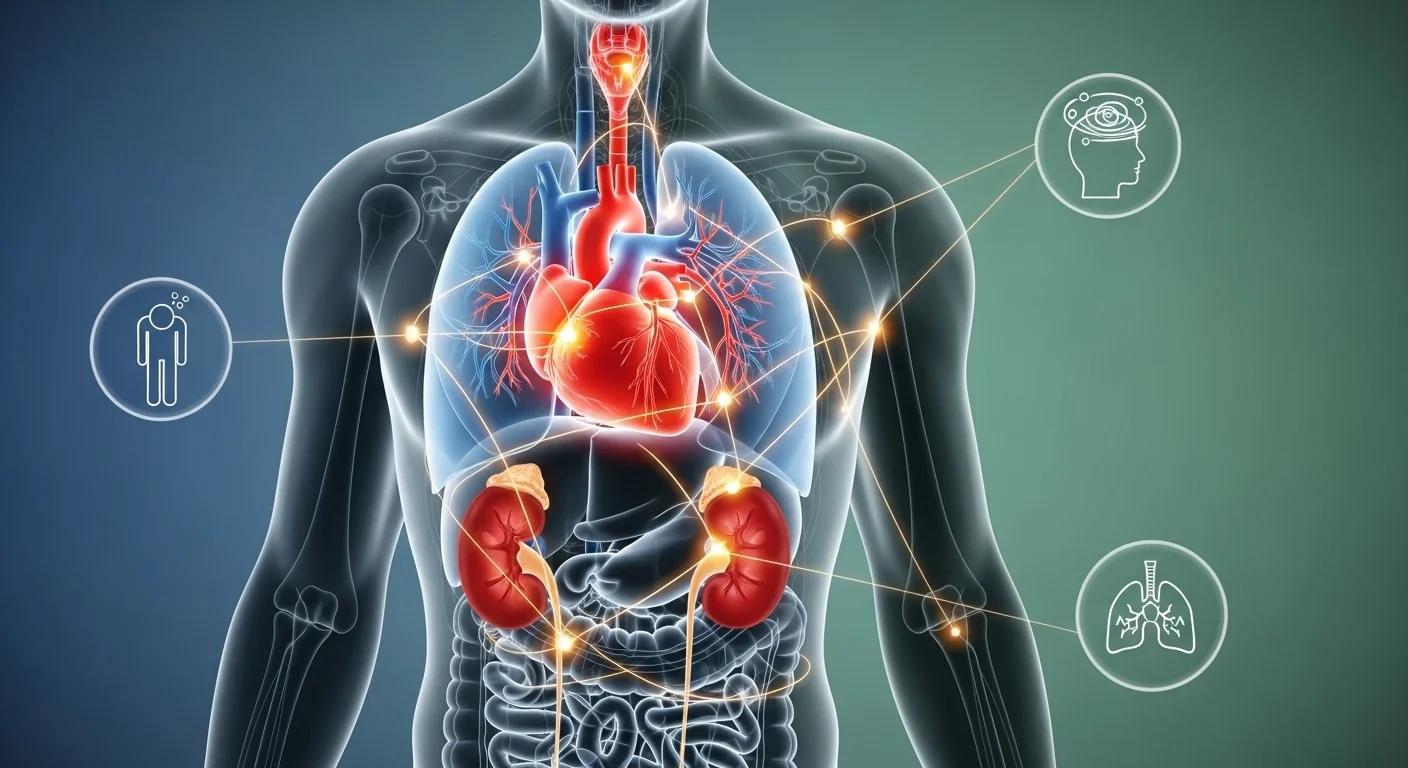
Why Does Ozdikenosis Kill You? Understanding the Breakdown of Oxygen, Nervous, and Cardiovascular Systems
Ozdikenosis is usually described in medical discussions and fictional case studies as a severe systemic condition that affects how the body handles oxygen, nerve signaling, and blood circulation. In simple words, it is a full-body breakdown disease.
What makes it so dangerous is not just one organ failing, but multiple life-support systems collapsing together.
Main reasons it becomes fatal:
- Disruption of oxygen delivery to vital organs
- Failure of neurological signaling in the brain and body
- Collapse of cardiovascular stability and blood flow
Once these three systems start failing at the same time, the body cannot maintain basic survival functions.
Understanding Ozdikenosis in Simple Terms
If we try to understand ozdikenosis in a very simple way, we can think of the human body like a highly coordinated system. Oxygen is the fuel, the nervous system is the communication network, and the cardiovascular system is the delivery system that keeps everything running.
Now imagine if:
- The fuel stops reaching important machines
- The communication lines start breaking down
- The delivery trucks stop moving properly
That is basically what happens in ozdikenosis.
It is not just one problem in one place. It is a chain reaction of failures that spreads quickly across the body.
That’s why people often ask, why does ozdikenosis kill you so fast? The answer is because it attacks everything that keeps you alive at the same time.
The Core Reason It Becomes Fatal
The main reason ozdikenosis kills is because it destroys the body’s ability to maintain homeostasis.
Homeostasis means balance. Your body is always balancing oxygen levels, blood pressure, nerve signals, and energy production. Even while sleeping, your body is working to maintain that balance.
Ozdikenosis interrupts that balance in three major ways:
- Oxygen transport collapses
- Brain and nerve communication breaks down
- Heart and blood circulation become unstable
When these systems fail together, recovery becomes extremely difficult, even with medical support.
1. Disruption of Oxygen Delivery to Vital Organs
One of the earliest and most dangerous effects of ozdikenosis is oxygen disruption.
Every organ in your body depends on oxygen:
- Brain needs it constantly to function
- Heart needs it to pump blood efficiently
- Kidneys need it to filter waste
- Muscles need it for energy
In ozdikenosis, oxygen transport becomes inefficient. This can happen in a few ways:
- Blood may not carry oxygen properly
- Oxygen exchange in tissues becomes weak
- Cells become unable to use oxygen effectively
When oxygen levels drop, organs begin to slow down. At first, a person might feel tired or confused, but as it worsens:
- The brain starts to malfunction
- The heart struggles to maintain rhythm
- Organs begin shutting down one by one
The most dangerous part is brain oxygen loss. Even a short period of reduced oxygen can lead to severe neurological impairment.
So in simple terms, ozdikenosis kills you because it slowly cuts off the oxygen supply your body depends on to function.
2. Failure of Neurological Signaling
The nervous system is like the body’s communication network. It sends signals from the brain to every organ, telling them what to do and when to do it.
In ozdikenosis, this signaling system becomes unstable.
At first, the brain may send weaker or delayed signals. Over time, the disruption becomes more serious:
- Muscle control becomes uncoordinated
- Reflexes slow down
- Cognitive functions like thinking and memory get affected
- Sensory processing becomes distorted
Eventually, the brain struggles to regulate basic life functions like breathing and heart rate.
This is where things become critical.
When neurological signaling fails:
- The body cannot respond to oxygen shortages properly
- The heart may beat irregularly without proper brain control
- Breathing patterns may become unstable
In severe cases, the brain simply cannot coordinate survival functions anymore. That’s a major reason ozdikenosis becomes fatal.
3. Collapse of Cardiovascular Function
The cardiovascular system is responsible for pumping blood and delivering oxygen throughout the body. It is essentially the transport system of life.
In ozdikenosis, this system becomes unstable due to stress on the heart and blood vessels.
Here’s what happens step by step:
- Blood pressure begins to fluctuate unpredictably
- The heart works harder to compensate for oxygen loss
- Blood vessels may become less responsive
- Circulation efficiency drops
As the condition progresses, the heart may start failing to maintain steady pumping.
This leads to:
- Reduced blood flow to the brain
- Reduced oxygen delivery to organs
- Accumulation of metabolic waste in tissues
When the cardiovascular system collapses, the body can no longer distribute oxygen or nutrients. This is often the final stage before total systemic failure.
How These Three Systems Work Together Against the Body
What makes ozdikenosis especially deadly is that these three systems are deeply connected.
It’s not like one fails and the others stay stable. Instead:
- Oxygen disruption weakens the brain
- A weakened brain sends poor signals to the heart
- A failing heart reduces oxygen supply even more
This creates a loop of worsening failure.
We can think of it like a spiral:
- Less oxygen → weaker brain function
- Weaker brain → poor heart regulation
- Poor heart function → even less oxygen
And the cycle continues until the body can no longer recover.
Symptoms Progression (How It Develops)
Although ozdikenosis is often described in theoretical or rare clinical contexts, symptom progression usually follows a pattern:
Early Stage
- Fatigue and weakness
- Mild confusion or brain fog
- Shortness of breath during activity
- Slight irregular heartbeat
Middle Stage
- Noticeable cognitive decline
- Difficulty concentrating
- Muscle weakness and coordination issues
- Frequent dizziness
Advanced Stage
- Severe oxygen deprivation symptoms
- Loss of coordination and balance
- Irregular breathing patterns
- Heart instability
Critical Stage
- Multi-organ failure signs
- Severe neurological shutdown
- Cardiovascular collapse
- Loss of consciousness
At this point, survival becomes extremely unlikely without immediate and intensive intervention.
Why the Body Cannot Compensate
Normally, the human body is very good at compensating for problems. If oxygen drops slightly, the heart beats faster. If blood pressure changes, vessels adjust.
But in ozdikenosis, compensation systems fail because:
- The nervous system cannot properly regulate responses
- The cardiovascular system is already weakened
- Cells cannot efficiently use oxygen even when available
So the body keeps trying to fix the problem, but each system it relies on is also breaking down.
That’s why it overwhelms the body so quickly.
Possible Contributing Factors (General Understanding)
In theoretical discussions, ozdikenosis is sometimes linked with:
- Severe metabolic imbalance
- Cellular oxygen processing failure
- Neurological pathway degeneration
- Cardiovascular stress overload
It is often considered a multi-system failure condition rather than a single-origin disease.
Why It Escalates So Fast
One of the most alarming aspects is the speed of progression.
This happens because:
- Oxygen deprivation affects the brain within minutes to hours
- The brain controls almost all survival functions
- Once brain control weakens, other systems destabilize rapidly
So instead of a slow, isolated illness, ozdikenosis behaves more like a cascading system failure.
Can the Body Recover?
In theory, early intervention could stabilize some functions if caught extremely early. However, once multiple systems are significantly affected, recovery becomes very difficult.
The main challenge is that:
- Restoring oxygen alone is not enough
- The nervous system must also recover signaling ability
- The heart and circulation must stabilize at the same time
If even one of these systems remains unstable, relapse or continued decline is likely.
Why It Is Considered So Dangerous
We can summarize its danger in a simple way:
Ozdikenosis is dangerous not because it targets one organ, but because it targets the entire life-support network of the body.
It affects:
- Oxygen delivery (fuel system)
- Nervous system (control system)
- Cardiovascular system (transport system)
When all three fail together, the body loses its ability to sustain life.
Final Thoughts
So when we ask why does ozdikenosis kill you, the answer is not a single cause. It is a combination of failures that reinforce each other until the body can no longer maintain basic survival.
It starts with oxygen disruption, spreads into neurological failure, and ends with cardiovascular collapse. Each system depends on the others, so once the cycle begins, it becomes extremely difficult to stop.
In simple terms, ozdikenosis is fatal because it breaks the three core pillars that keep the human body alive: oxygen supply, brain communication, and blood circulation. Once all three begin collapsing together, the body has no backup system left to rely on.
Explore the latest entertainment news and reviews at The Teckjb!